
UBAY ISLAND, BOHOL — Survivors from Bohol’s island communities marked the fourth anniversary of Super Typhoon Odette with a community-led art installation on Ubay Island on Tuesday, December 16. The project, developed with artist Leeroy New and Greenpeace Philippines, transforms the devastation of the typhoon into a public expression of remembrance and the growing call for climate accountability.
Titled Hagit sa Kaugma-on (“Challenge of the Future”), the installation was created through hands-on workshops with climate-impacted residents of Tubigon. The main artwork uses locally sourced bamboo and incorporates personal objects damaged by the typhoon, including fragments of homes and tools tied to fishing and farming livelihoods. These elements serve as both memory and a statement for justice.
![Fragments of homes and fishing tools are woven into the artwork, symbolizing resilience and memory. [photo credit: Greenpeace]](https://ecofriendlytip.com/wp-content/uploads/2025/12/Art-Activation-49-scaled.jpg)
Fragments of homes and fishing tools are woven into the artwork, symbolizing resilience and memory. [photo credit: Greenpeace]
Communities reclaim their stories through art
“When Odette hit, everything we worked for disappeared in one night. Our home, our boats, our sense of safety for our children,” said Niña Caren Caballa. “We are tired of being told to be resilient. We want change that keeps our families safe. This installation holds not only our memories but also the fight we carry in our hearts every day.”
Many participants in the installation are also claimants in a recently filed legal case in the United Kingdom against oil giant Shell, which cites research showing that human-induced climate change more than doubled the likelihood and intensity of Odette. The artwork provides a parallel space for agency while justice moves through the courts.
Art amplifies climate accountability
“Art is part of actively creating a solution,” said Leeroy New. “It’s embedded in our daily life and contributes to the betterment of society. Creating something specific to this place, together with the community, draws attention to what people have lived through and the systems shaping these realities.”
Super Typhoon Odette struck Bohol on December 16, 2021, killing 110 people in the province and causing over Php 10 billion in damages to infrastructure and agriculture. Nationwide, Odette claimed more than 400 lives and caused over Php 34 billion in damages.
“Fossil fuel corporations have known their pollution would intensify the climate crisis and still chose profit over people,” said Virginia Benosa-Llorin of Greenpeace Philippines. “Communities were left to rebuild while companies like Shell continued to earn billions. They must be held accountable.”
The Ubay Island installation builds on earlier community-led initiatives, including the Community Art Tapestry and the People’s Museum for Climate Justice. It underscores the role of Philippine climate-impacted communities as leaders in the global fight for accountability.
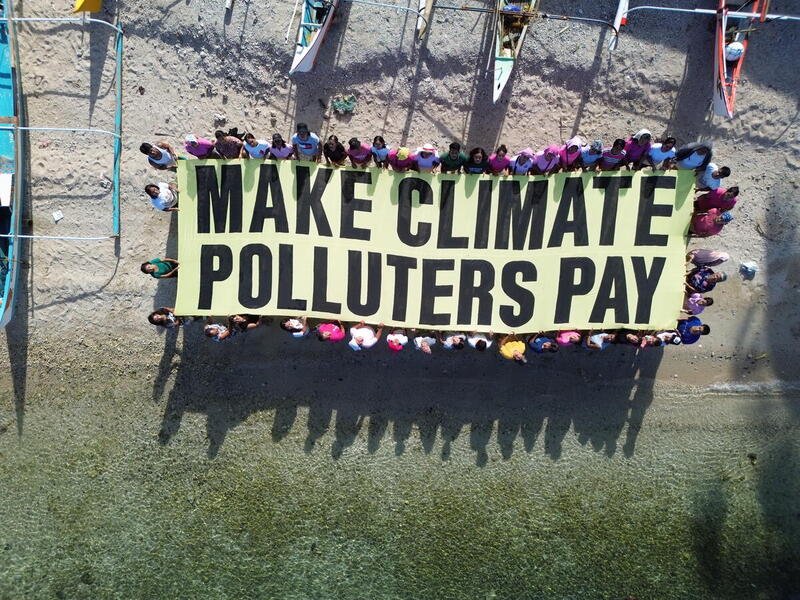
As the fourth anniversary of Typhoon Odette is observed, these communities affirm that remembrance is also strength. Through shared memory, creative expression, and collective action, they are calling for a safer future and accountability from polluters. Greenpeace urges support for the Odette Case, the Climate Accountability Bill, and online petitions to amplify the voices of affected communities.


![Jean Golong wears Filipiniana gown with climate justice message at Pride 2025 [photo credit: Noel Celis / Greenpeace]](https://ecofriendlytip.com/wp-content/uploads/2025/06/NC22-scaled.jpg)
![Greenpeace Philippines joins LoveLaban 2025 to push for climate justice [photo credit: Noel Celis / Greenpeace]](https://ecofriendlytip.com/wp-content/uploads/2025/06/NC015-scaled.jpg)



Leave a Reply