
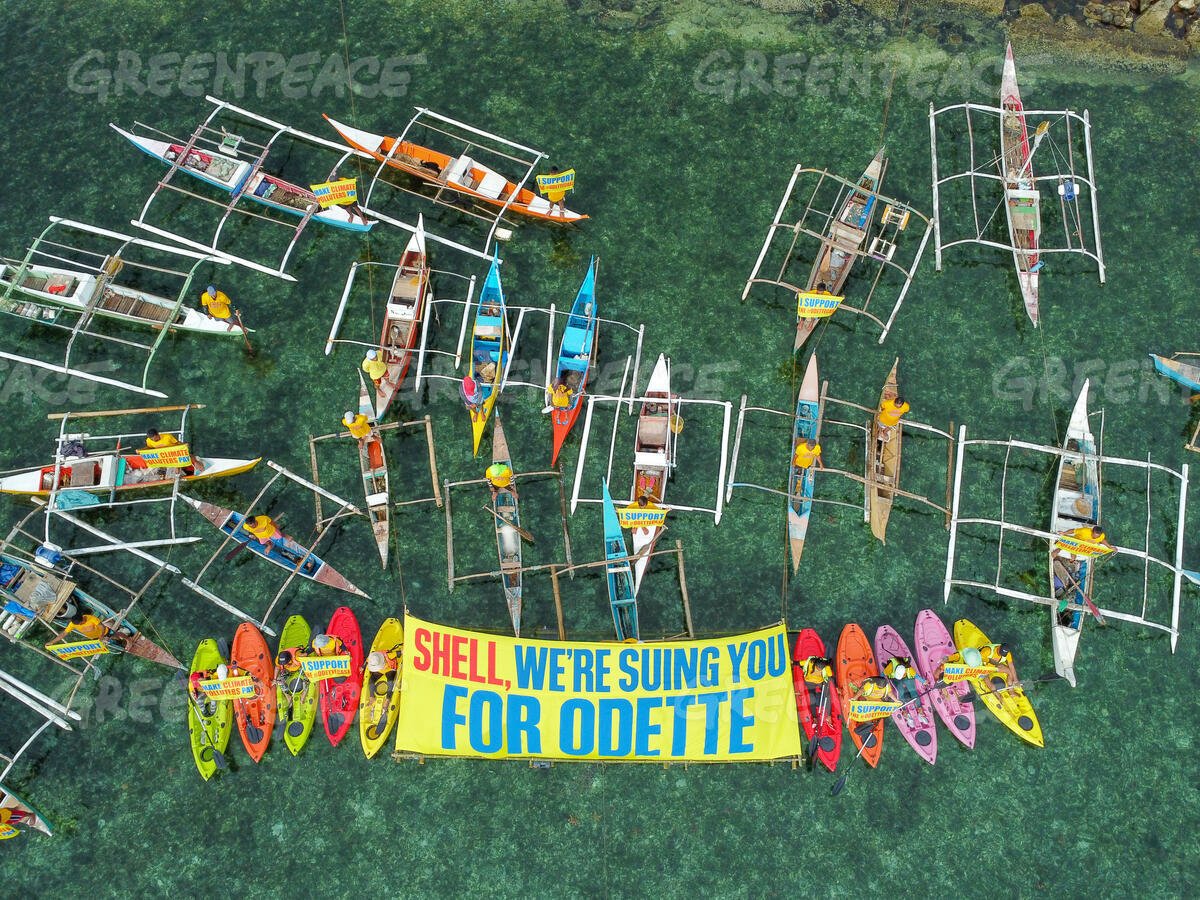
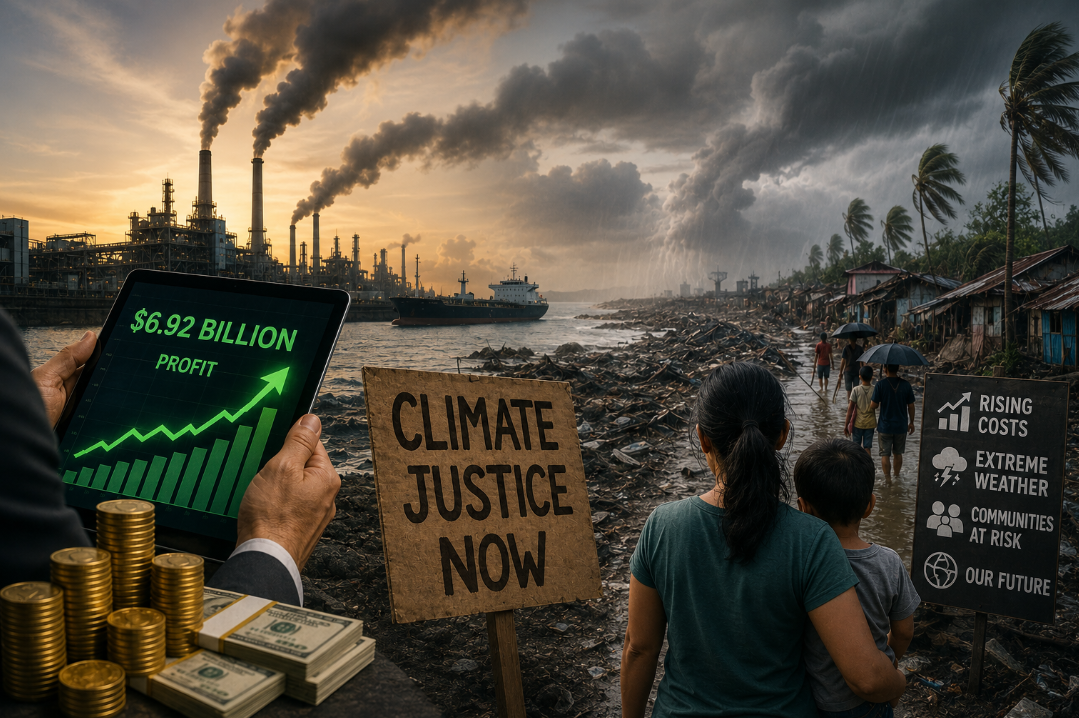
Greenpeace Philippines denounced Shell’s reported $18.5 billion annual profit, describing it as a stark symbol of how fossil fuel corporations continue to generate massive earnings while frontline communities endure escalating climate impacts.
The environmental group said the announcement comes at a painful time for Filipinos still rebuilding from destructive storms intensified by climate change. For many survivors, the figures represent more than corporate success — they reflect a widening justice gap.
Less than two months ago, 103 Filipino survivors of Super Typhoon Odette filed a landmark lawsuit against Shell in UK courts. The case cites scientific research linking fossil fuel emissions to the increasing severity of storms affecting the Philippines.
A separate report from Influence Map’s Carbon Majors platform listed Shell among the top 20 carbon major entities by emissions in 2024. The same analysis notes that the top 20 carbon producers collectively account for 872 gigatons of CO2 equivalent, or 42.5% of global historical fossil fuel and cement emissions since 1824, with Shell ranking ninth in cumulative emissions from 1854 to 2024.
Survivors link corporate profits to climate suffering
Communities affected by Super Typhoon Odette argue that Shell’s profits were generated amid widespread loss of homes, livelihoods, and lives. Greenpeace said the injustice remains visible in mounting debts and stalled recovery efforts across disaster-hit areas.
Arnold Obguia, a resident of Bilangbilangan Island in Tubigon, Bohol, and one of the Odette claimants, said fisherfolk and island communities continue to suffer from unchecked carbon emissions. He described the contrast between corporate wealth and flooded homes as a daily reality for families struggling to rebuild.
Although Shell’s earnings declined from $23.72 billion the previous year, climate advocates say the difference is negligible compared to the ongoing financial strain on vulnerable communities. They argue that disaster response and recovery costs repeatedly push both citizens and government deeper into debt.
Calls mount for climate accountability and fossil fuel phase-out
Greenpeace Philippines Climate Campaigner Jefferson Chua called the profits “grossly unfair,” saying they benefit a few corporations while the majority face extreme weather and economic hardship. He pointed to government acknowledgments that climate change has contributed to one of the country’s worst economic downturns in decades.
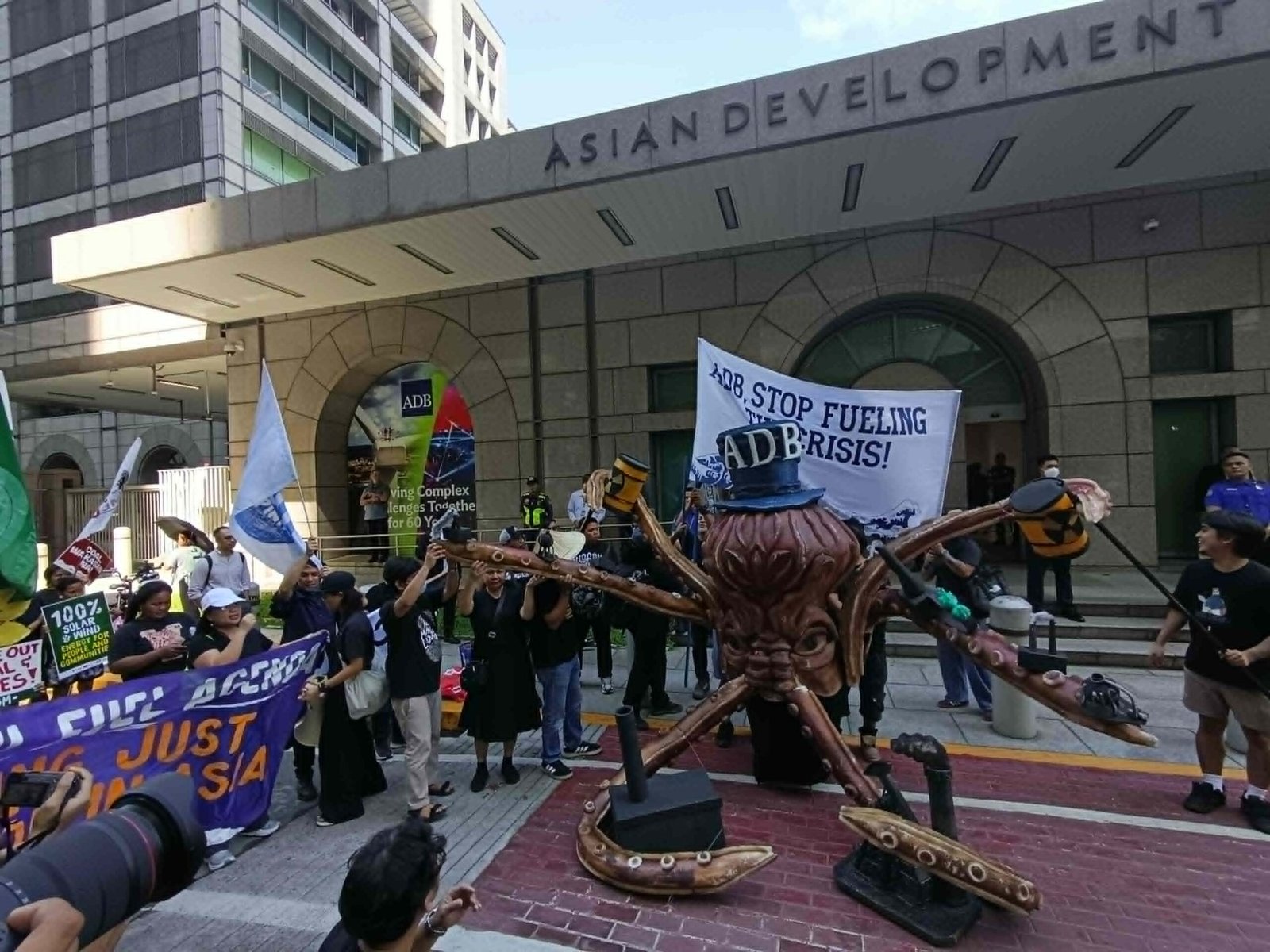
Chua urged President Ferdinand Marcos Jr. to accelerate the country’s fossil fuel phase-out and prioritize climate justice policies. He also called on Congress to fast-track the proposed Climate Accountability (CLIMA) Bill, which would require major carbon polluters to compensate communities for climate-related loss and damage.
Greenpeace said holding corporations accountable is critical to preventing further economic and human losses. For affected communities, the fight is not only about compensation but about safeguarding future generations from worsening climate disasters.
![Navotas residents call for stronger climate action and environmental protection. [photo credit: Jilson Tiu | Greenpeace]](https://ecofriendlytip.com/wp-content/uploads/2026/07/Untitled-design378.png)
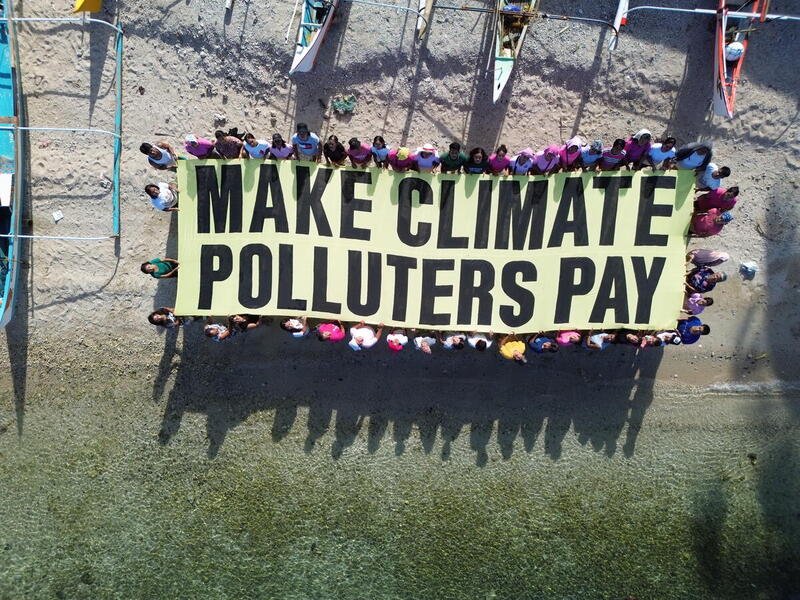
![Climate advocates urge polluters to bear the costs of climate-related loss and damage. [photo credit: Alecs Ongcal]](https://ecofriendlytip.com/wp-content/uploads/2026/07/Untitled-design350.png)
![The landslide draws parallels to the Payatas tragedy 25 years ago. [photo credit: The Freeman Facebook]](https://ecofriendlytip.com/wp-content/uploads/2026/01/612956653_1222808069988718_2520356168325713841_n.jpg)

![Greenpeace calls for accountability as Filipinos rebuild after Uwan’s devastation. [photo credit: Jilson Tiu | Greenpeace]](https://ecofriendlytip.com/wp-content/uploads/2025/11/JTIU7946-scaled.jpg)
Leave a Reply