
A Federal High Court in Nigeria has overturned the 2020 revocation of the Dawes Island marginal field license, siding with Eurafric Energy Limited. The decision challenges the Ministry of Petroleum Resources’ prior refusal to renew Eurafric’s license, which had expired without commercial production after 17 years. Since 2022, Petralon 54 Limited has held and developed the field, and it has now filed an appeal with a stay of execution pending higher court review. The ruling carries significant implications for Nigeria’s upstream sector, already navigating production recovery and reform implementation under the Petroleum Industry Act (PIA).
The African Energy Chamber (AEC) has strongly condemned the judgment, emphasizing its impact on Nigerian companies developing marginal fields. The Chamber supports the Ministry and Petralon, urging a resolution that allows Petralon to continue production, monetize the asset, and contribute to national energy goals.
Judicial overreach and regulatory concerns
AEC highlights concerns over the ruling’s legal basis, particularly the retrospective application of the PIA, enacted in August 2021, to events that occurred before its passage. The Dawes Island license expired in April 2019, and non-renewal occurred in April 2020 under the regulatory framework at that time. Applying new legislation retroactively threatens legal certainty, which is critical for attracting long-term upstream investment.
The judgment also treated 62,000 barrels produced during a well test as evidence of commercial production, a move inconsistent with established upstream practice. Well tests are technical evaluations rather than sustained production, which requires regulatory approval. Additionally, the court relied on an unsigned farm-out agreement to assert legal interest, contradicting contract law principles that unsigned documents do not create binding obligations. Together, these factors risk creating precedents where courts intervene in technically complex petroleum matters in ways that may conflict with regulatory standards and fiscal governance.
Petralon’s operational progress and commitment
Under Petroleum Prospecting License 259 (PPL 259), Petralon invested approximately $60 million to drill two wells and establish support facilities, exceeding the one-well commitment. Over 150,000 barrels have been produced and evacuated to the Bonny Terminal, with royalty payments already remitted. The second well’s completion was witnessed by Minister of State for Petroleum Resources Heineken Lokpobiri in November 2025, demonstrating alignment with government oversight. Petralon plans to double production, showcasing the effectiveness of Nigeria’s “drill or drop” policy and the Project One Million Barrels initiative.
Petralon, incorporated in 2014, holds a diversified upstream portfolio, including one operated field and two non-operated deepwater assets. The company has indirect exposure to OML 127 and OML 130 through a 6.06% shareholding in Prime Oil & Gas, encompassing some of Nigeria’s largest deepwater fields, such as Agbami, Akpo, Egina, and Preowei. This track record reinforces Petralon’s credibility as a Nigerian upstream operator with operational discipline and regulatory compliance.
AEC Executive Chairman NJ Ayuk stressed that inconsistent judicial decisions jeopardize Nigerian independents’ investments, job creation, production growth, and energy security. Supporting companies like Petralon ensures that local capital contributes to Nigeria’s upstream development rather than being discouraged by legal uncertainty.
![The landslide draws parallels to the Payatas tragedy 25 years ago. [photo credit: The Freeman Facebook]](https://ecofriendlytip.com/wp-content/uploads/2026/01/612956653_1222808069988718_2520356168325713841_n.jpg)


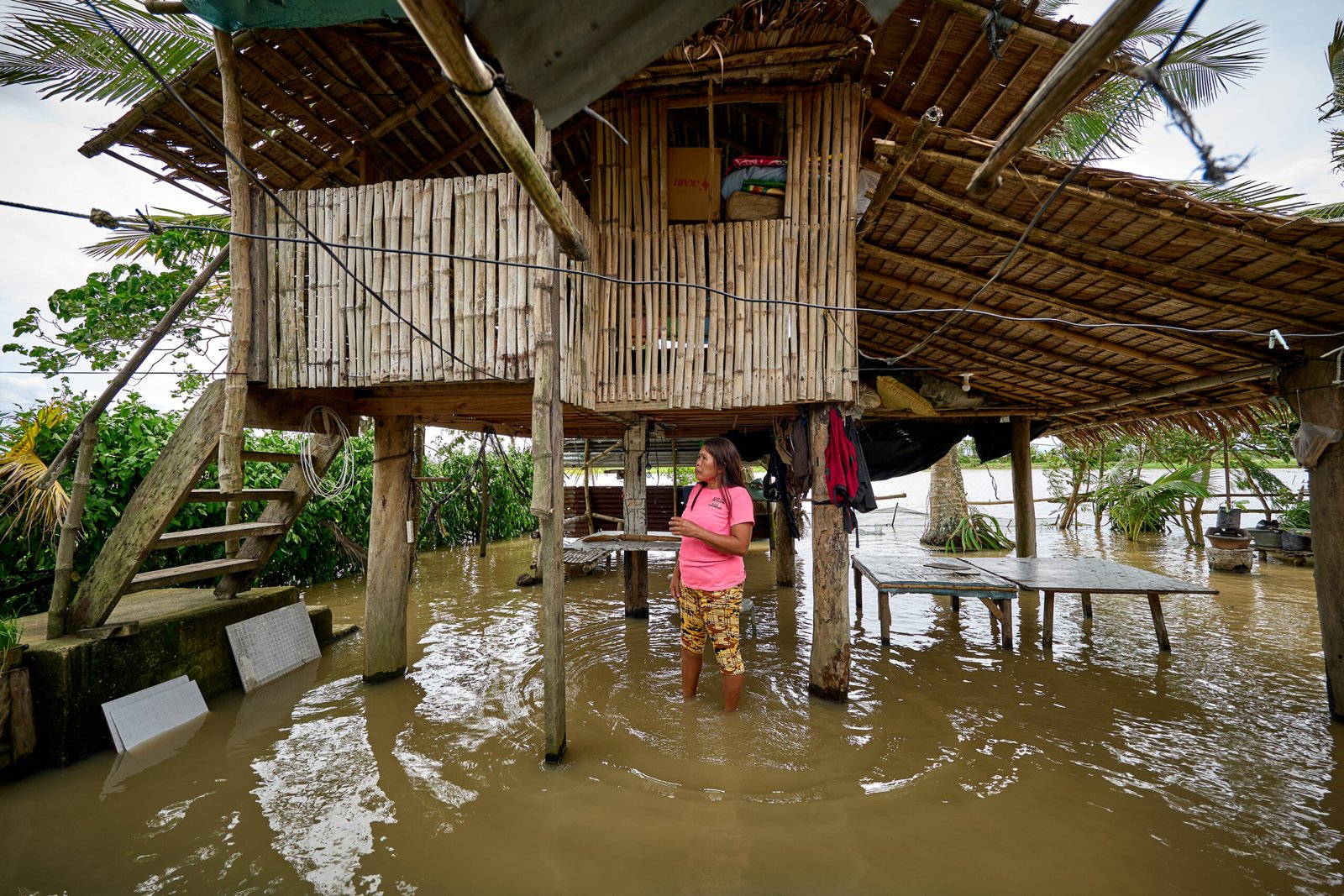
![Greenpeace calls for accountability as Filipinos rebuild after Uwan’s devastation. [photo credit: Jilson Tiu | Greenpeace]](https://ecofriendlytip.com/wp-content/uploads/2025/11/JTIU7946-scaled.jpg)




Leave a Reply