
A landslide at a Cebu City landfill trapped several individuals in the management building, leaving at least one dead, 12 rescued, and more than 30 still missing. Rescue and retrieval operations are ongoing. Greenpeace Campaigner Marian Ledesma said the disaster is reminiscent of the Payatas tragedy 25 years ago.
“This incident shows a grim picture of our broken waste management system that has failed Filipinos and communities once again,” Ledesma said. She emphasized that such events are likely to recur “as long as the government continues to allow the overproduction of residual waste, particularly single-use plastics.”
![The landslide draws parallels to the Payatas tragedy 25 years ago. [photo credit: The Freeman Facebook]](https://ecofriendlytip.com/wp-content/uploads/2026/01/612956653_1222808069988718_2520356168325713841_n.jpg)
The landslide draws parallels to the Payatas tragedy 25 years ago. [photo credit: The Freeman Facebook]
Policy gaps in RA 9003 enforcement
The Ecological Solid Waste Management Act of 2000 (RA 9003) was passed after the Payatas disaster to prevent waste through source reduction and segregation. Enforcement has been inconsistent, Ledesma said, and local governments continue to struggle with growing volumes of single-use plastics that end up in landfills.
More than 25 years after RA 9003, the Philippines still lacks a national policy regulating single-use plastics. The DENR and NSWMC are still struggling to implement a meaningful non-environmentally acceptable products and packaging (NEAPP) list. Meanwhile, the 2022 Extended Producer Responsibility (EPR) Law (RA 1198) has failed to curb plastic pollution.
Calls for urgent government and corporate action
Greenpeace is urging the government to fully implement RA 9003, including enforcing single-use plastic bans, expanding the NEAPP list, promoting reuse systems, and ensuring proper waste segregation. The EPR Law must also be amended to set clear targets and timelines for plastic reduction. Corporations relying on disposable packaging must be held accountable, drastically reducing plastic production and shifting to refill and reuse systems.
“Casualties from landslides in dumpsites are just the tip of the iceberg,” Ledesma said. Vulnerable communities near landfills face daily risks from pollution and toxic effluents. She warned, “The government shouldn’t wait for another tragedy, but should act now to address the plastic pollution crisis decisively.”

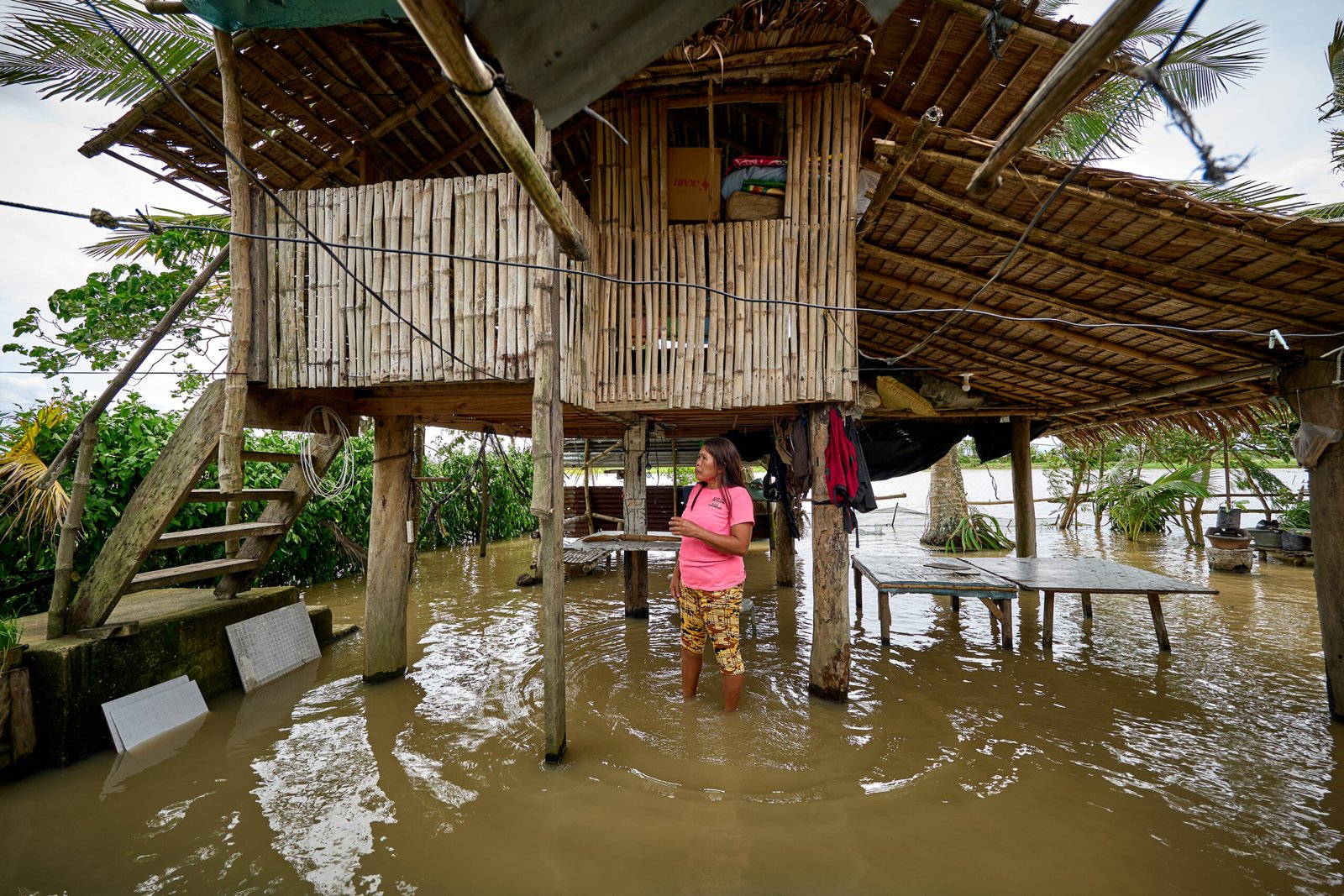
![Greenpeace calls for accountability as Filipinos rebuild after Uwan’s devastation. [photo credit: Jilson Tiu | Greenpeace]](https://ecofriendlytip.com/wp-content/uploads/2025/11/JTIU7946-scaled.jpg)


![climate change representation image [Photo by Markus Spiske on Unsplash ]](https://ecofriendlytip.com/wp-content/uploads/2025/05/markus-spiske-RN14PbITnnM-unsplash-scaled.jpg)
![Typhoon survivors from Salcedo, Eastern Samar, delivered a letter to the SEC office in Makati, urging stricter climate accountability for corporations. Marking 11 years since Haiyan, they brought 11 ruined items as symbols of their loss. [Photo by Jilson Tiu | Greenpeace]](https://ecofriendlytip.com/wp-content/uploads/2025/02/GP0SU38S5_Medium-res-1200px.jpg)

Leave a Reply