
Extreme heat is no longer just a discomfort for millions of Filipinos — it’s becoming a direct threat to their survival, and a new report says the government isn’t doing nearly enough to stop it.
Greenpeace Philippines and the National Anti-Poverty Commission – Victims of Disasters and Calamities (NAPC-VDC) jointly launched “Here Comes the Sun: Climate Justice-based Recommendations for Protecting Communities from Extreme Heat” on Tuesday, a report that lays bare the policy and governance gaps holding back the country’s response to dangerous heat while pushing for the immediate passage of House Bill 4420, or the Climate Accountability Bill (CLIMA Bill).
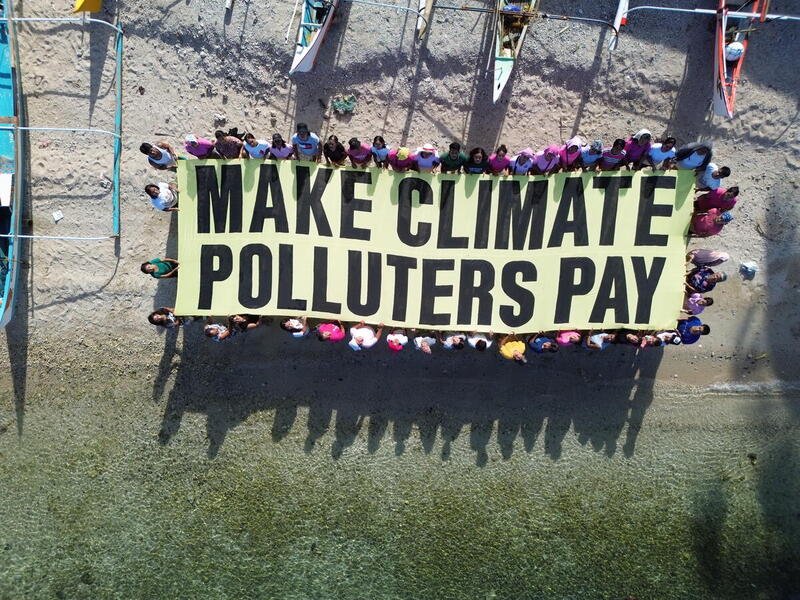
![Climate advocates urge polluters to bear the costs of climate-related loss and damage. [photo credit: Alecs Ongcal]](https://ecofriendlytip.com/wp-content/uploads/2026/07/Untitled-design350.png)
Climate advocates urge polluters to bear the costs of climate-related loss and damage. [photo credit: Alecs Ongcal]
The findings, drawn from seven focus group discussions held in Navotas, Bataan, Laguna, Siargao, Eastern Samar, Tacloban City, and Cadiz City, were presented during a media forum in Quezon City attended by environmental activists, grassroots organizations, experts, and government representatives.
Fisherfolk on the Frontlines of a Worsening Crisis
At the heart of the report is a case study of 71 fisherfolk across Luzon, Visayas, and Mindanao, a sector that consistently ranks among the poorest of the country’s 14 basic sectors. According to the Philippine Statistics Authority (PSA), fisherfolk face a poverty incidence of roughly 27.4% to 30.6%, nearly double the national baseline of 15.1%. The report shows how worsening extreme heat is compounding that vulnerability, threatening the health, livelihoods, and overall wellbeing of fishing communities already living on the margins.
The report found that while the Philippine government does have existing policies and programs that treat heat as a trigger for response, there is no single overarching policy that addresses heat stress as a holistic, standalone crisis. Disaster response and climate financing tied to heat stress remain scattered across different sectors, the report notes, limiting the government’s ability to act effectively. Critical gaps also persist in treating heat stress as a genuine climate justice issue, one that demands coordinated and properly funded responses rather than piecemeal fixes.
Who Foots the Bill? Report Pushes for Polluters to Pay
The report also confronts a question that’s becoming harder to avoid: Who should pay for the mounting costs of heat-related loss and damage? Right now, much of that financial burden falls on the public and the Philippine government, a dynamic that risks deepening the country’s public debt while letting the world’s biggest climate polluters off the hook.
With extreme heat events growing more frequent and intense due to climate change, compounded by the ongoing El Niño phenomenon, the report calls on the government to act urgently on several fronts. It urges the national government to fulfill its obligations under the International Court of Justice Advisory Opinion (ICJAO) on state responsibility for climate change, including prioritizing the recently filed House Resolution 1074 and developing scientifically defined criteria for declaring a state of imminent disaster. It also calls on President Ferdinand Marcos Jr. to certify as urgent a climate-lensed Magna Carta of Workers in the Informal Economy (MACWIE) Bill alongside the CLIMA Bill, the latter specifically designed to make climate polluters pay.
Beyond legislation, the report pushes for a broader shift in governance, moving past simply “mainstreaming” climate concerns and toward fully integrated mechanisms for addressing extreme heat across sectors. It also calls for recentering human rights and human wellbeing as the core organizing principles behind any government response to heat stress, and for climate financing that’s grounded in justice and reparations, ensuring those most responsible for the climate crisis are the ones who bear its costs.
![Navotas residents call for stronger climate action and environmental protection. [photo credit: Jilson Tiu | Greenpeace]](https://ecofriendlytip.com/wp-content/uploads/2026/07/Untitled-design378.png)
![Greenpeace calls for accountability as Filipinos rebuild after Uwan’s devastation. [photo credit: Jilson Tiu | Greenpeace]](https://ecofriendlytip.com/wp-content/uploads/2025/11/JTIU7946-scaled.jpg)

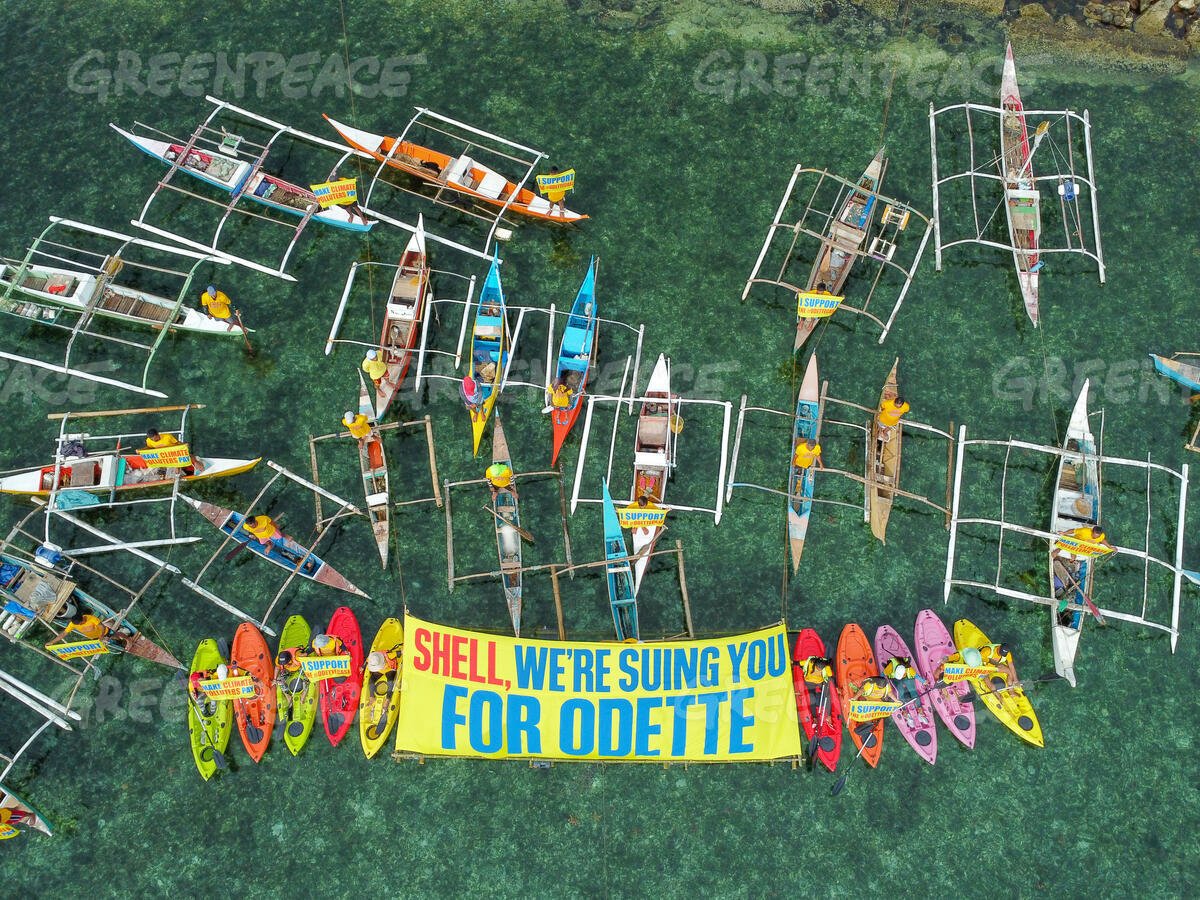
![Climate activists demand accountability from major fossil fuel companies. [photo credit: Ivan Joeseff Guiwanon | Greenpeace]](https://ecofriendlytip.com/wp-content/uploads/2025/10/Island-008-scaled.jpg)
![Flooded streets in the Philippines illustrate the urgent need for effective climate adaptation projects. [photo credit: Noel Celis | Greenpeace]](https://ecofriendlytip.com/wp-content/uploads/2025/09/GP0SU6A0V.jpg)
![Greenpeace banners calling for climate justice [photo credit: Noel Celis | Greenpeace]](https://ecofriendlytip.com/wp-content/uploads/2025/07/NC0012-scaled.jpg)
Leave a Reply