
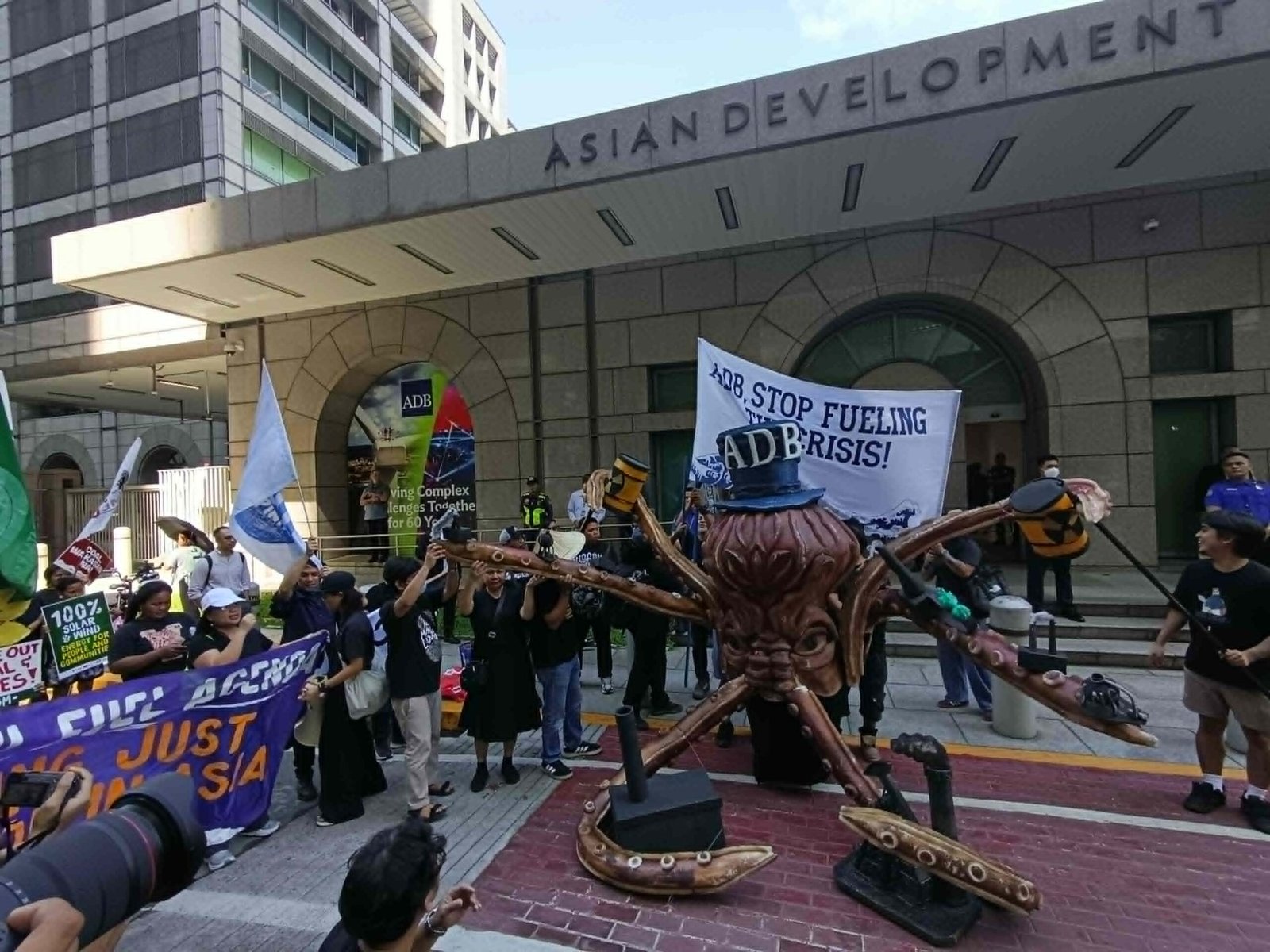
Civil society organizations led by NGO Forum on ADB staged a large-scale creative protest at the 21st Asia Clean Energy Forum 2026 in Mandaluyong City. They unveiled a giant “Kraken of Destruction” to condemn what they described as the Asian Development Bank’s continued role in fossil fuel financing and harmful energy investments. The protest highlighted growing tensions over the direction of Asia’s energy transition. It also framed the ADB as central to what activists call a deepening energy crisis.
The demonstration took place outside the ACEF 2026 venue with community representatives and activists confronting a symbolic kraken installation. Organizers said the structure represented the Bank’s “system of energy capture,” with tentacles symbolizing fossil fuels, mining, waste-to-energy, nuclear energy, and financial control over energy systems. The protest combined visual performance with political messaging aimed at global development finance. It also drew attention to long-standing disputes over energy policy in Asia.
Kraken protest targets ADB energy policies
Activists dismantled parts of the installation during the protest to symbolize resistance against what they described as destructive energy systems. They argued that ADB-backed projects have contributed to energy insecurity, environmental damage, and rising inequality across the region. According to Elle Bartolome of the Philippine Movement for Climate Justice, communities have been locked into decades of harmful development. She said the energy crisis is structurally created through long-term lending and fossil fuel dependence.
Bartolome further criticized ongoing coal and fossil fuel projects in the Philippines, citing communities in Cebu and Zambales as examples of prolonged environmental and health struggles. She said many affected communities continue to seek justice without resolution despite years of advocacy. Her statement emphasized that energy development has often prioritized financing structures over public welfare. It also linked local struggles to broader regional patterns of extraction and pollution.
Forum Network representatives also argued that the ADB continues to expand fossil fuel-linked financing under the guise of emergency response mechanisms. They pointed to programs such as trade and supply chain finance initiatives that facilitate oil imports and energy transactions. According to the group, these mechanisms lack transparency and accountability. They said such policies effectively normalize continued fossil fuel dependence during periods of global crisis.
Calls for energy transition reform
Advocates at the forum said Asia’s energy challenges are being worsened by geopolitical conflict, volatile fuel prices, and rising debt pressures in developing countries. They argued that instead of shifting away from fossil fuels, financial institutions are reinforcing dependency through new lending frameworks. Lidy Nacpil of the Asian Peoples’ Movement on Debt and Development said a just transition must prioritize renewable systems. She stressed that public financing should replace debt-driven energy models.
Nacpil also criticized what she described as false solutions, including carbon-intensive technologies and continued fossil gas expansion. She said these approaches delay meaningful climate action and lock countries into costly infrastructure. Other groups echoed concerns over nuclear energy and large-scale extractive mining projects linked to transition minerals. They warned that such investments could deepen inequality and environmental harm across vulnerable communities.
Additional criticism was directed at ADB’s growing reliance on private sector partnerships in energy development. Advocates argued that these partnerships often lack transparency and may involve companies with poor environmental and human rights records. Marjorie Pamintuan of Recourse said development finance must prioritize public needs over corporate interests. She added that energy systems should be built on renewable foundations and stronger safeguards.

![The landslide draws parallels to the Payatas tragedy 25 years ago. [photo credit: The Freeman Facebook]](https://ecofriendlytip.com/wp-content/uploads/2026/01/612956653_1222808069988718_2520356168325713841_n.jpg)


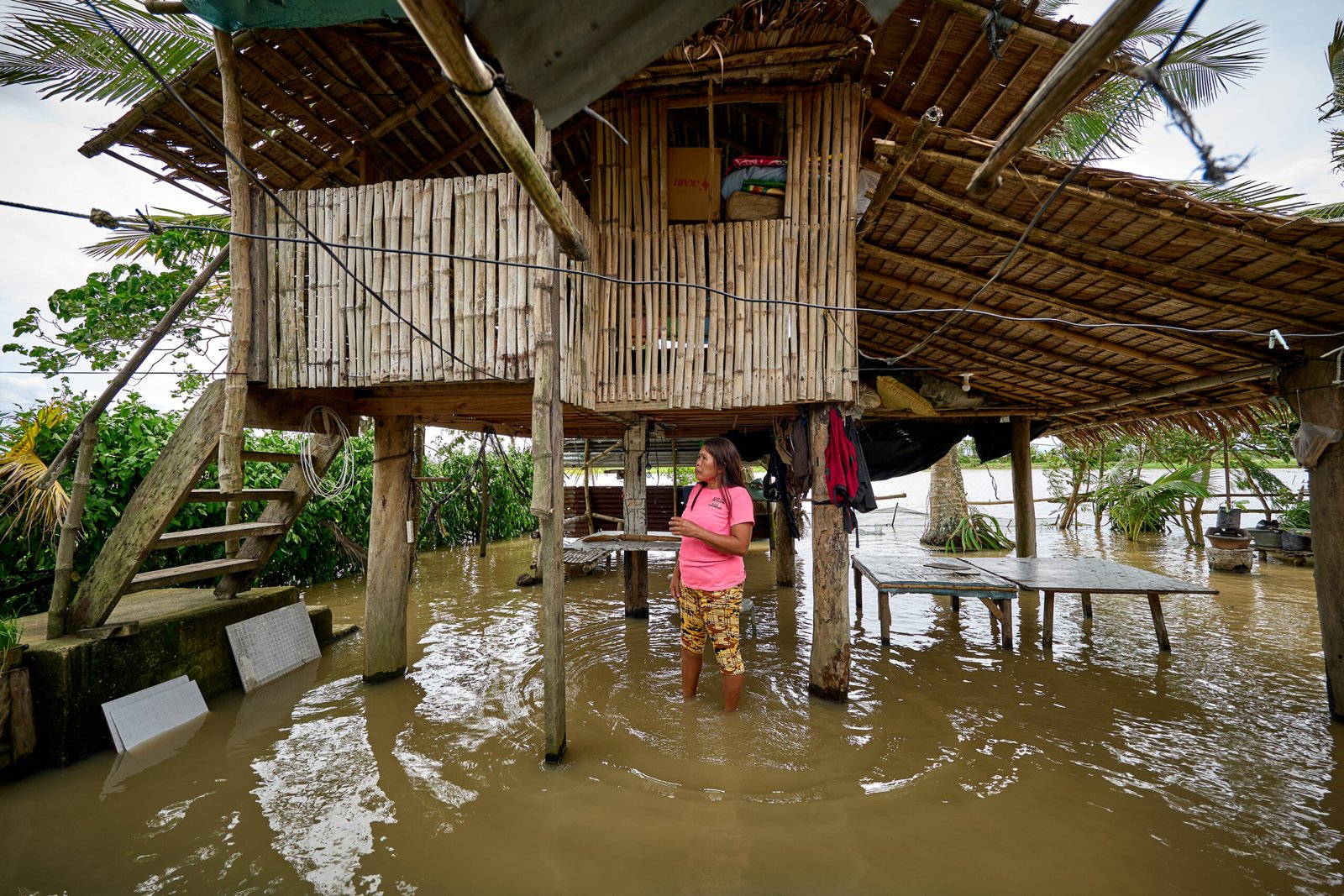
![Greenpeace calls for accountability as Filipinos rebuild after Uwan’s devastation. [photo credit: Jilson Tiu | Greenpeace]](https://ecofriendlytip.com/wp-content/uploads/2025/11/JTIU7946-scaled.jpg)




Leave a Reply